Catalog
 MyEsbelt
 CPortal
 Contact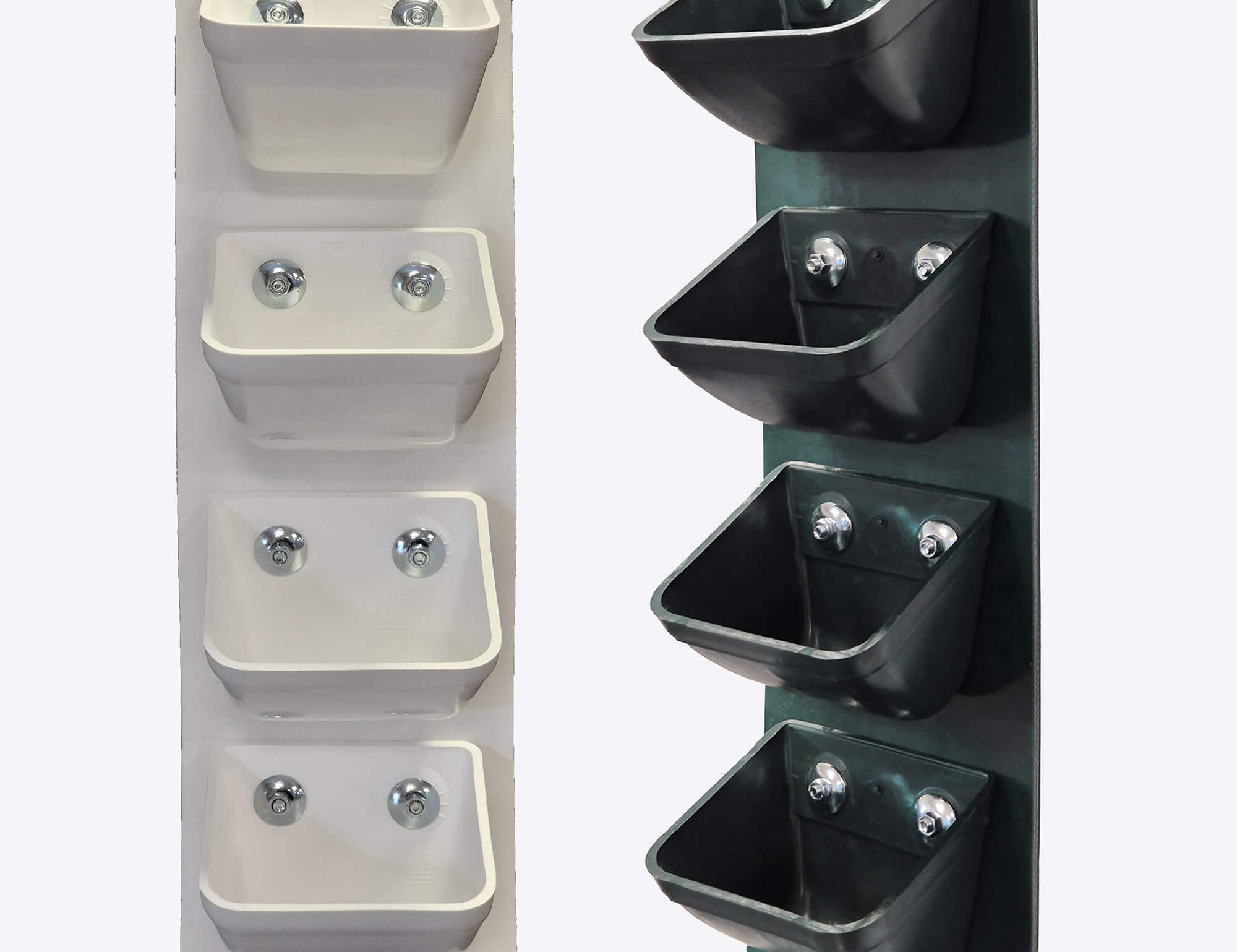
Demanding vertical transfer
esbelt® belts for bucket elevators are designed to withstand demanding vertical transfer conditions. Bucket elevators combine a high-strength, heavy-duty belt with metal or plastic buckets bolted to it.
It is commonly used for elevating bulk products in granular form in an enclosed structure to a higher point for unloading into a silo.
Our bucket elevator belts with multi-layer fabric construction distributes load evenly reducing elongation. Less time is needed to re-tension the belts, saving maintenance costs. Lighter compared to rubber belts, energy consumption is reduced by using our bucket elevator belts, lowering production costs.
High mechanical and structural resistance
Our belts incorporate pre-tensioned and heat-set fabrics, which ensures a stable and durable structure. They are designed to withstand high loads, impacts and continuous stress without suffering deformation or breakage.
Low elongation and minimal maintenance required
Thanks to their multi-layer design and technical materials, our belts have very low elongation, even in intensive cycles. This reduces the frequency of re-tensioning, saves maintenance time and improves the productivity of the installation.
Materials
Properties






Regulation
Benefits
Characteristics
At esbelt we have a wide range of belts depending on the characteristics of the product to be transported;
Downloads
Brochure: Belts for bucket elevators ()
Belts for industrial bucket elevators: high strength, minimal elongation, and maximum safety. Designed for efficient vertical conveyance in demanding environments, reducing downtime and optimizing productivity.
Brochure Espot Series Belts ()
Food-grade belts (FDA and EU 10/2011) with excellent resistance to vegetable oils with flexible weave fabrics for trough transport and lifting of fatty foods and feeds.
Brochure: ATEX anti-explosion belts ()
ATEX-certified conveyor belts for potentially explosive environments. Designed for safety, durability, and regulatory compliance in industrial processes involving combustible dust.