 Catalog
 MyEsbelt
 CPortal
 Contact
Grape Harvesting belts: resistance and reliability in every harvest
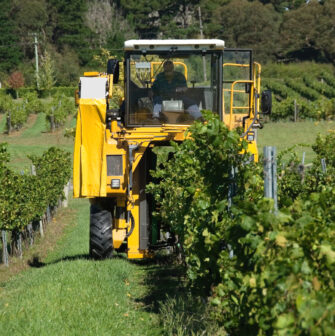
Grape harvesting machine consists of a propellant with conveyor belt that facilitates the collection and conveyance of grapes from the vineyard to the harvester hopper. The conveyor belt works under tough conditions receiving scratches, tears, hits from the grape vine. Belt performance is jeopardized when longitudinal profiles detach or transverse cleats break or the belt joints give way.
For more than 20 years, esbelt® has supplied belts for grape harvesters and is highly regarded by leading manufacturers for its reliability, strength, and durability.
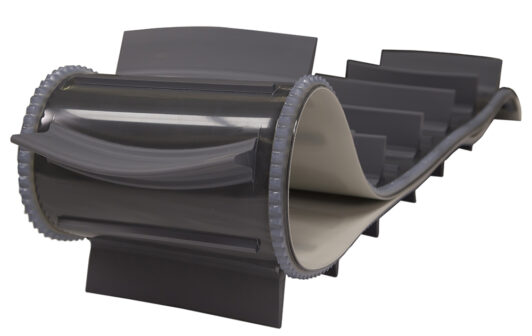
Our PVC belts for grape harvesting machines, with 2 and 3 plies and curved transverse cleats, are compact and highly resistant to cuts and impacts. Also available is a 4-ply PVC belt with exceptional mechanical resistance, recommended for high-performance grape harvesters. The special structure of esbelt® belts allows the replacement and repair of cleats individually, without the need to replace the entire belt.
Features



Regulation
Reduce maintenance costs and improve production during the harvest, minimizing downtime and breakdowns.
Downloads
Brochure: Belts for grape harvesting machines ()
Belts for grape harvesting machines: high resistance to cuts and impacts, repairable design, durability and reliability for grape harvesting machines.
Workshop Services
Fabrication of belts for harvesting machines
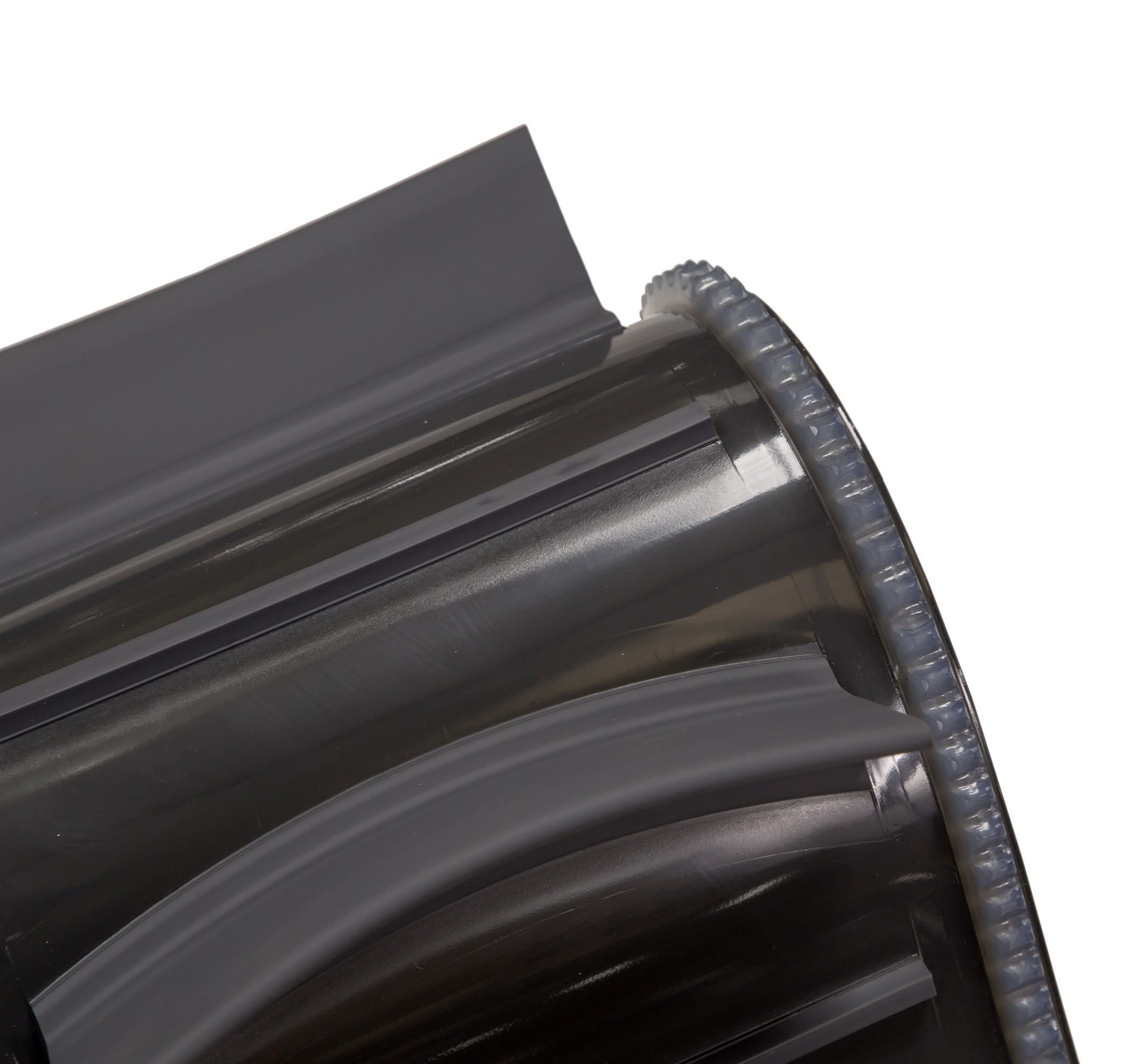
Widely used and recognized belts, robust with great transverse rigidity. High frequency machine welded profiles with high impact and tear resistance, lasting twice as long as average belts and can be repaired for up to two seasons.
Attachment of guides
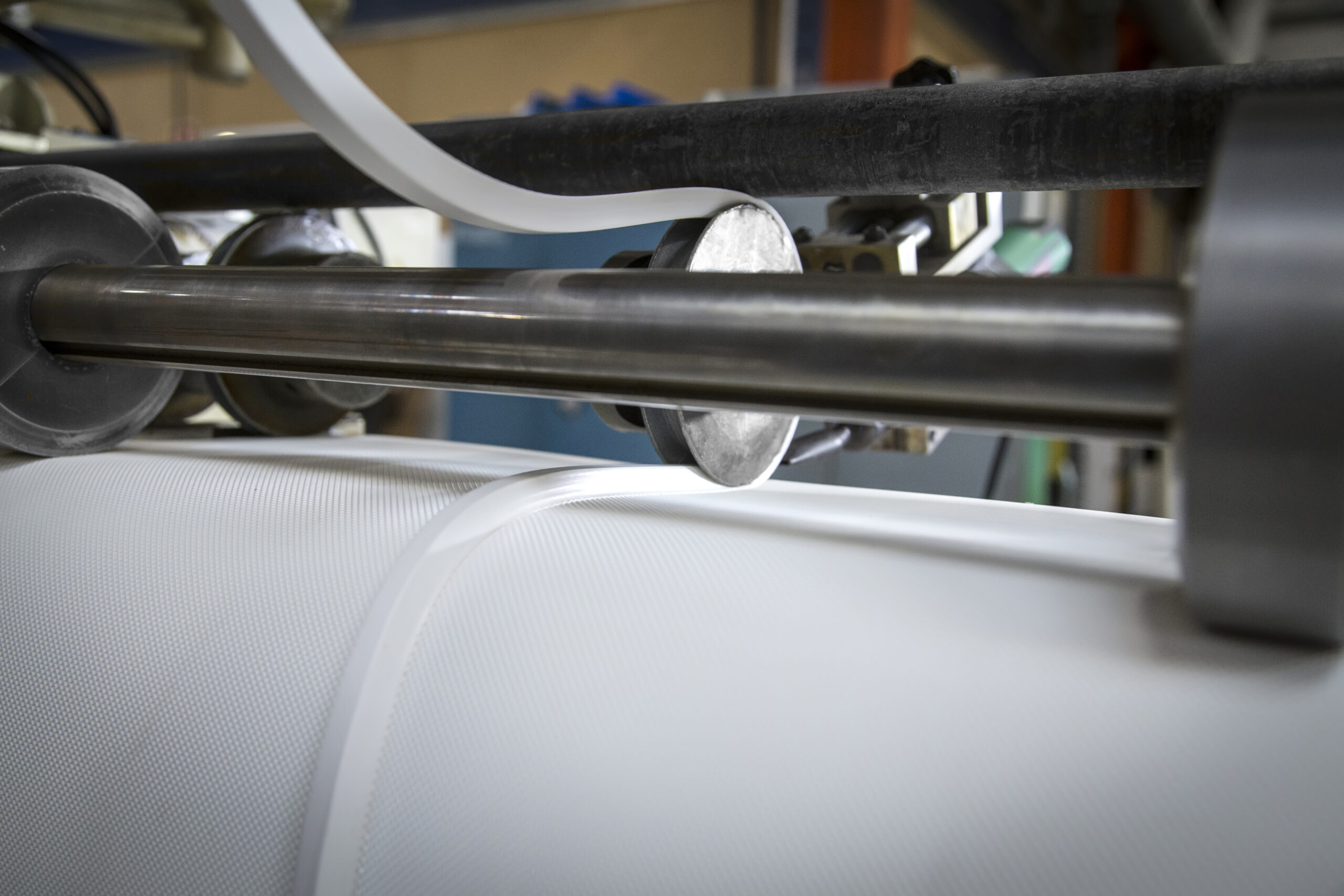
We weld longitudinal guides of varying heights to conveyor belt covers using welding machines, ensuring joint quality, mechanical resistance, and service life.
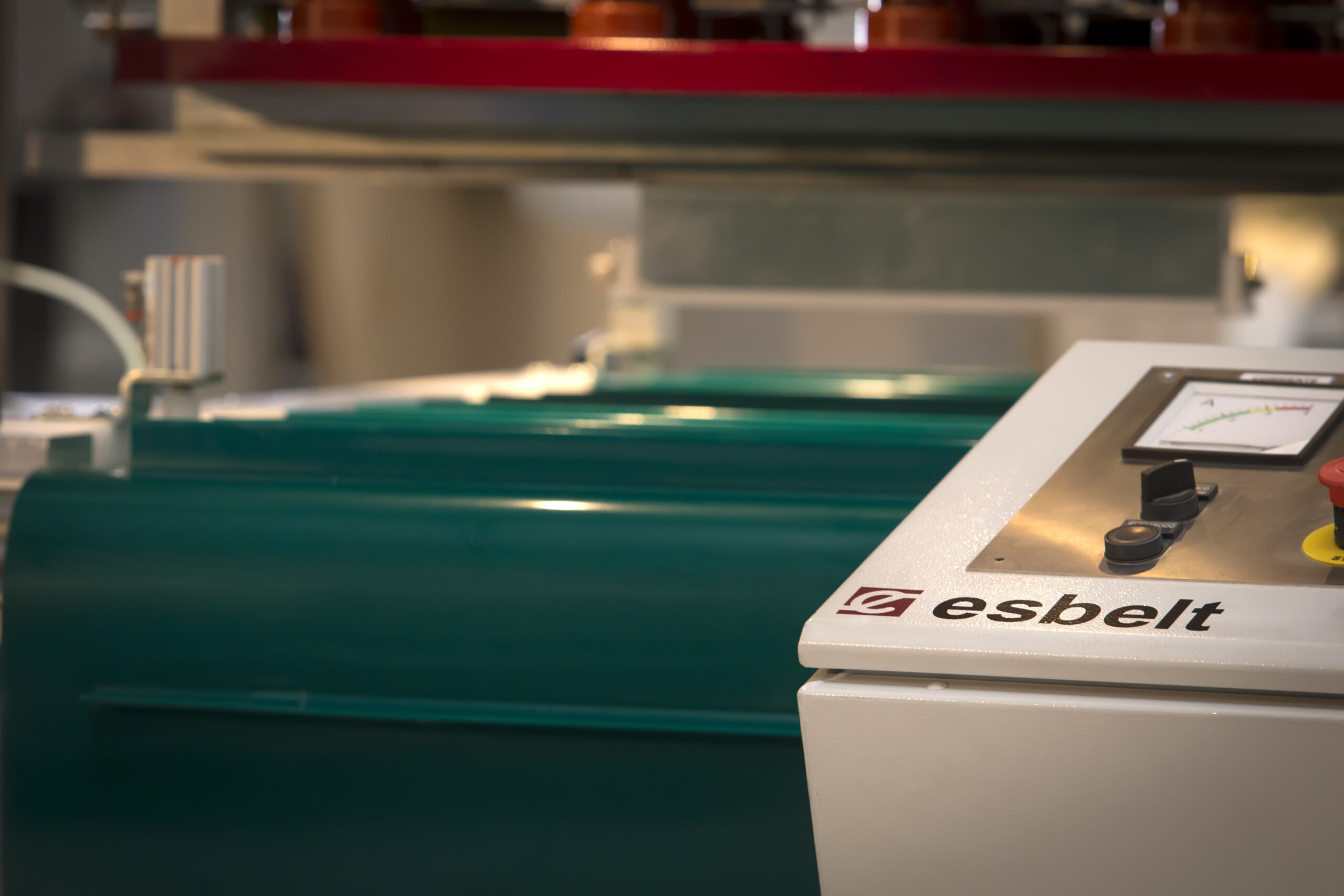
Attachment of cleats
TPU or PVC cleats, flights or transverse profiles are attached using high frequency welding machine, which provides a strong, precise, and durable bond without adhesives or irregularities. This method guarantees a uniform surface and allows for the adaptation of profiles of different shapes and materials according to the application, improving performance in inclined conveyors and product sorting.